
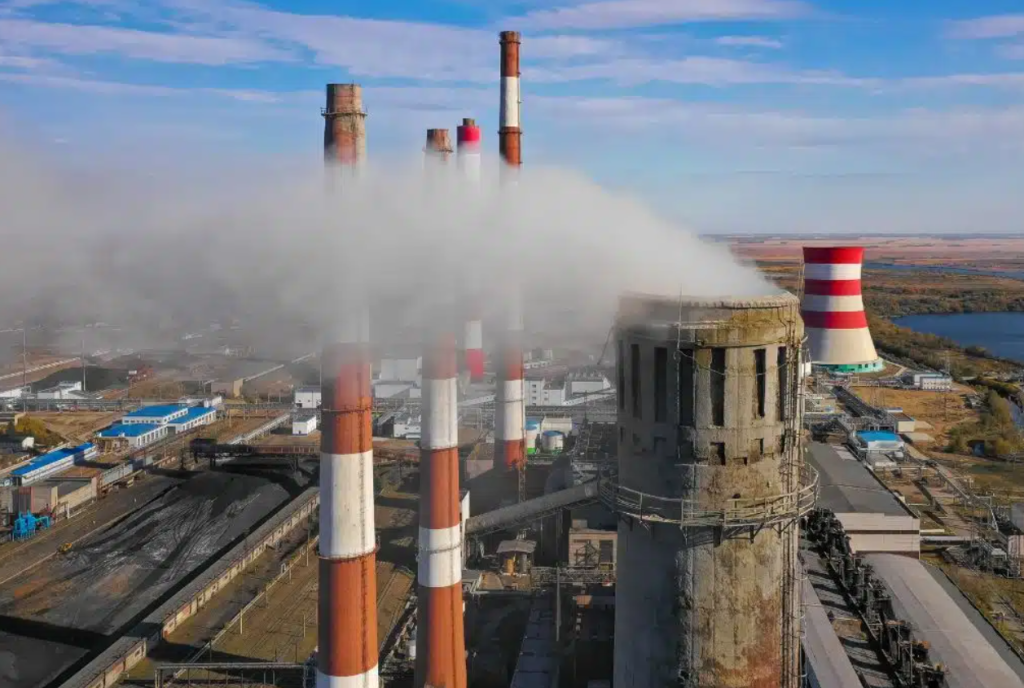
Atmospheric concentrations of carbon dioxide, methane, and nitrous oxide reached unprecedented highs in 2025, committing the planet to a warmer future.
Atmospheric concentrations of all three major planet-warming greenhouse gases reached new highs in 2025, committing the planet to rising temperatures for many years to come, the World Meteorological Organization (WMO) has said.
When the UN agency released its first assessment 22 years ago, carbon dioxide (CO2) concentrations stood at 377.1 parts per million (ppm). Last year, they hit 426.8 ppm, a record high.
Carbon dioxide, a by-product of burning fossil fuels, biomass, land-use changes, and industrial processes such as cement production, is the principal anthropogenic greenhouse gas in the atmosphere, responsible for about three-quarters of planet-warming emissions. Its extremely long durability in the atmosphere commits the planet to rising temperatures “not just for years but for decades and even centuries,” WMO’s Deputy Secretary-General Ko Barret said on Tuesday.
Global CO2 emissions from fossil fuels have increased by 153% since the 1750 pre-industrial baseline, with the vast majority of the rise occurring since 1990.

Concentrations of methane in 2025 were 1,948 parts per billion (ppb). Global methane emissions have been on the rise and atmospheric concentrations of the potent gas are now more than 267% higher than pre-industrial levels in 1750.
Methane – a gas mainly associated with fossil fuel use, agriculture and waste – is the second major greenhouse gas after CO2, responsible for 16% of the warming effect on our climate by long-lived greenhouse gases. Despite its shorter lifetime compared to CO2, it is 84 times more potent in trapping heat in the atmosphere than CO2 over a two-decade period and it possesses a 100-year global warming potential 28-34 times that of CO2.
Meanwhile, concentrations of nitrous oxide climbed to 339.1 ppb. Nitrous oxide is the third-most significant human-caused greenhouse gas. It is mainly associated with the use of nitrogen fertilizer and manure from the expansion and intensification of agriculture. Atmospheric concentrations of this gas are now 126% higher than the pre-industrial level.
Fossil Fuel Era
The burning of coal, natural gas, and oil for electricity and heat is the single-largest source of global greenhouse gas (GHG) emissions, the primary drivers of global warming by trapping heat in the atmosphere and raise Earth’s surface temperature.
While global fossil fuel consumption has more than doubled in the last 50 years, as countries around the world aim to improve their standards of living and economic output, scientists have long warned that curbing fossil fuel extraction and consumption is the only way to halt global warming and secure a liveable future.
The International Energy Agency has urged countries to halt new gas and oil field projects, arguing that this is the only way to keep the 1.5C-compatible net-zero emissions scenario alive.
Source link : View Article