
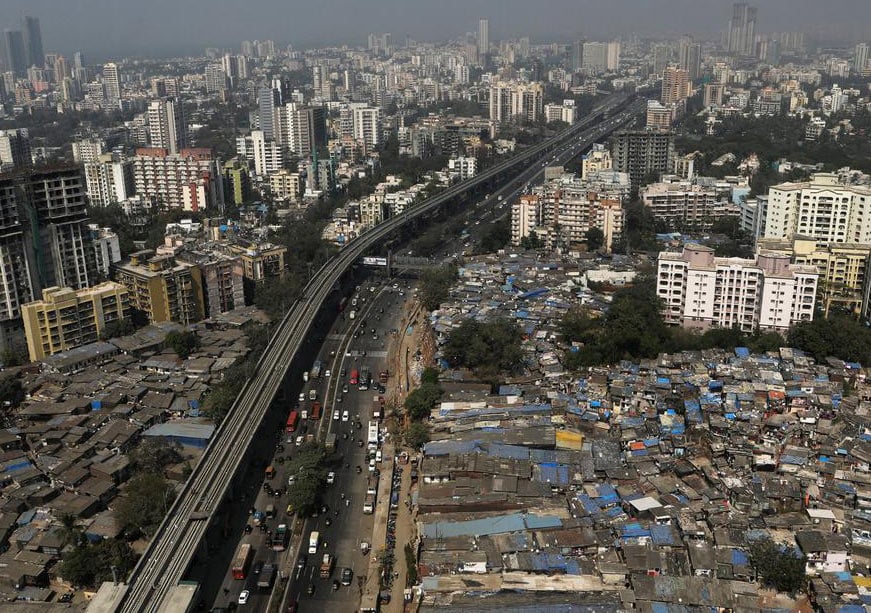
India’s rapid urbanisation demands planned, sustainable development through transit-oriented planning, municipal reforms, social protection, and resilient infrastructure to manage growth and unlock urban potential
According to Census data, India’s urban population rose from around 286 million in 2001 to around 377 million in 2011 — an increase of roughly 91 million within a decade. No official figures are available beyond 2011, as the subsequent Census was delayed due to the COVID-19 pandemic. The Union Cabinet has stated that population enumeration will be conducted during 2026–2027. In the absence of updated Census data, population projections by Indian and international agencies provide indicative estimates. The Report of the Technical Group on Population Projections estimates that 469 million people were living in urban areas in 2021, a figure projected to rise to 555 million by 2031. Similarly, the United Nations (UN) World Urbanisation Prospects 2025 notes that India and China will have the largest populations residing in towns between now and 2050.
Given prevailing demographic trends, India is on its way to urbanise significantly in the coming years.
In proportional terms, India remains less urbanised than many developed countries. In 2001, about 28 percent of the population lived in urban areas, rising to around 32 percent in 2011. According to projections, the share was around 35 percent in 2021 and is expected to rise to around 38 percent by 2031. By contrast, several developed nations are over 70 percent urbanised. What differentiates India from other urbanised countries is the large absolute number of urban residents. Although the proportion is lower, the total numbers are substantial. Given prevailing demographic trends, India is on its way to urbanise significantly in the coming years.
Urbanised nations have adopted various strategies to manage urban growth and its associated changes, aiming to prevent disorder and harness the benefits of transformation. This article outlines selected sustainability measures initiated in India to address the challenges of urbanisation.
Initiatives to Address Urban Sustainability Challenges
Planned Urban Development: The national government provides financial and technical support to state governments to implement Town Planning Schemes (TPS), especially in peripheral urban areas where land is available for developing infrastructure, housing, commercial areas, and parks. The schemes aim to ensure that future urban growth is managed systematically. Under this arrangement, landowners are encouraged to voluntarily transfer their irregularly shaped, agricultural, or low-value land to the city’s development agency, which pools the land, develops infrastructure, brings planned and serviced plots to market, and returns a portion of the developed land to the landowners. In Ahmedabad, for example, an area of about 4.52 sq km has been appropriated for affordable housing. Another significant intervention is the formulation of city-level transit-oriented development (TOD) plans, along with implementation and financing strategies. This measure involves the development of housing, commercial, and leisure activities within walking distance of public transit stations, to curb urban sprawl and reduce dependence on private motor vehicles. A recently announced initiative to harness the economic potential of cities involves mapping city economic regions based on their specific growth drivers and implementing corresponding plans.
A recently announced initiative to harness the economic potential of cities involves mapping city economic regions based on their specific growth drivers and implementing corresponding plans.
Urban Governance Reforms: A high-level committee has been constituted to make recommendations on urban policy, planning, implementation, and governance. Some proposed measures include the creation of a National Urban and Regional Planning Authority, an All-India Urban Planning Service, a National Grid of Urban Capacity Development Institutions, and City Economic Councils in large and strategic cities. In addition, a select number of existing academic institutions have been designated as Centres of Excellence, which are engaged in developing country-specific knowledge in urban planning and design, creating artificial intelligence solutions, and delivering certified training in these areas.
Municipal Financial Reforms: Additional funds for urban development and management are being mobilised from various potential sources. For example, property tax collection is being strengthened through GIS-based identification of properties, digital governance, and administrative reforms. Second, user charges on urban infrastructure are being ring-fenced to ensure their long-term maintenance. Reforms in property tax and user charge practices will help cities strengthen their financial position and improve their creditworthiness for municipal bonds. In addition, the national government is providing financial incentives for the issuance of higher-value municipal bonds. Third, state governments are being encouraged to lower stamp duty on property transactions to reduce the burden on buyers and boost real estate demand. Fourth, an Urban Infrastructure Development Fund (UIDF) has been established through the use of priority sector lending shortfalls to finance projects in Tier-2 and Tier-3 cities. Efforts are also underway to operationalise the Urban Challenge Fund (UCF), announced in February 2025, to support various urban development activities.
Support Measures for Informal and Gig Workers: A large working-age population is engaged in street vending. This group is eligible to receive collateral-free working capital loans from the national government. Street vendors are also expected to benefit from the proposed street food hubs initiative in select cities. Similarly, gig economy workers will profit from social security protection measures, including registration on the portal of unorganised workers (e-Shram) and access to healthcare facilities. These measures for street vendors and gig workers enable them to expand their businesses.
Reforms in property tax and user charge practices will help cities strengthen their financial position and improve their creditworthiness for municipal bonds.
Housing and Infrastructure Development: The housing shortage backlog is being addressed through increased financial allocations, interest subsidies to facilitate loans, faster land and construction approvals, and expanded access to capital for house construction. At the same time, efforts are being made to create rental housing stock through enabling policies and regulations. In the transport sector, the focus is on improving and expanding road- and rail-based public transport services, developing high-speed rail corridors between cities, shifting to clean energy sources such as hydrogen, and building manufacturing and charging infrastructure for electric vehicles. Sanitation is being improved through scientific management of dry and wet waste and mechanical desludging of septic tanks and sewers. In addition, water and sanitation projects are being promoted in 100 large cities. In view of rising energy demand and climate change risks, a low-carbon development strategy is being pursued that includes expanding infrastructure for solar power and nuclear energy, exempting imports of goods required for nuclear projects, and transitioning to a circular economy. Moreover, infrastructure and basic amenities in Tier-2 and Tier-3 cities (with populations of around 500,000) experiencing rapid growth will be strengthened. Urban residents are also expected to benefit from the development of digital infrastructure, including data centres, energy storage systems, and a knowledge grid.
Building Safety and Sustainability Regulations: The Model Building Bye-laws have been revised to guide state governments and municipalities in developing safer and more sustainable building structures. The objective is to ensure that buildings remain safe during hazards or disasters (fire, earthquake, flooding), are barrier-free for persons with disabilities, and include provisions for rainwater harvesting, wastewater reuse and recycling, solar-assisted heating, and segregated sanitation facilities in public buildings. In Rajasthan, for example, high-rise structures on plots up to 500 sq m have been prohibited to address the issue of rampant high-rise construction in residential areas.
In view of rising energy demand and climate change risks, a low-carbon development strategy is being pursued that includes expanding infrastructure for solar power and nuclear energy, exempting imports of goods required for nuclear projects, and transitioning to a circular economy.
Conclusion
India’s urban population is expected to grow significantly in the coming years. To guide future growth in a planned and sustainable manner, the national government has initiated a series of reform measures. The focus is on planned development of peri-urban areas, harnessing the economic potential of cities, promoting transit-oriented development, mobilising revenue through innovative mechanisms, ensuring job security for informal sector workers, and expanding digital infrastructure. In this endeavour, the expertise of reputed academic institutions and non-state entities is being sought. A data-driven approach, combined with the timely implementation of initiatives, will help India address the many challenges of urbanisation.
Source link : View Article