The city receives enough rain each monsoon, yet summers bring dry borewells and tanker queues. Here’s how every home can help store the rain before it’s too late.
Why would anyone choose to build a life in Bengaluru?
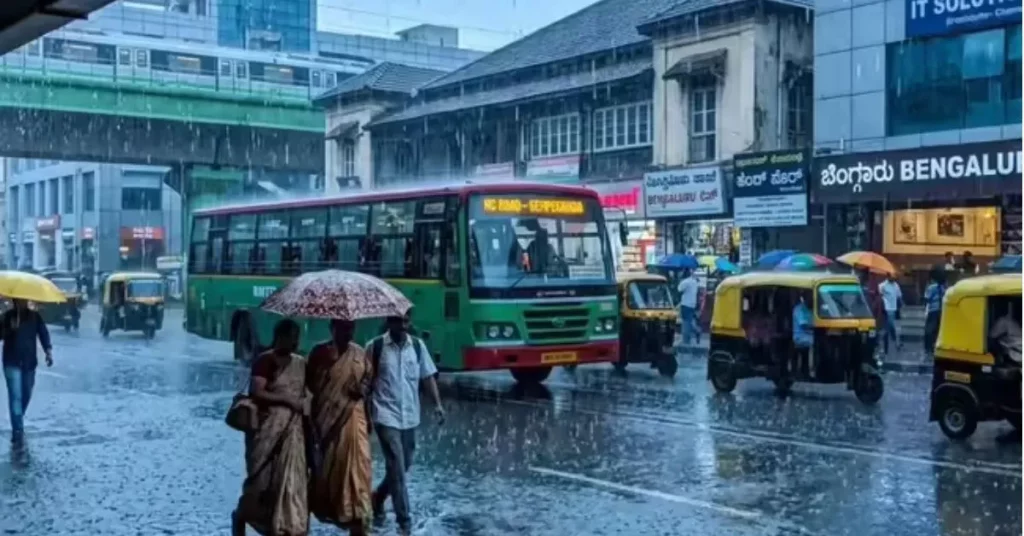
For many, the answer lies in its pleasant weather, tree-lined neighbourhoods and the joy of watching the city come alive during the monsoon. But while the rains transform Bengaluru into one of India’s most beautiful cities, the relief is often short-lived.
It raises an obvious question: If Bengaluru receives so much rain, why does it run out of water every summer?
The problem isn’t that the city gets too little rainfall. It’s that it fails to capture and store the water it receives. Much of the rain that falls on rooftops and roads rushes into stormwater drains and eventually leaves the city. At the same time, widespread concretisation prevents water from soaking into the ground.
According to Subhajit Mukherjee, popularly known as the Water Hero of India, the solution begins much closer to home.
Through the RWH India Helpline, he has already guided more than 200 households free of cost on simple ways to harvest rainwater and recharge groundwater.
“The rain that falls on your roof shouldn’t end up on the road,” he says. “Every rooftop should become a source of water.
Turn your rooftop into a water source
One of the easiest ways to conserve rainwater is through rooftop rainwater harvesting.
Instead of letting rainwater flow into drains, homes can channel it through pipes into storage tanks or underground recharge pits. The stored water can then be used for gardening, cleaning, washing vehicles or flushing toilets, reducing the demand for treated drinking water.
Even homes without space for large storage tanks can direct rainwater into recharge pits, allowing it to seep underground and replenish aquifers that feed wells and borewells.
Mukherjee calls this approach “Mera Chhat, Mera Pani” (My Roof, My Water) — encouraging every household to retain the rain that falls on its own roof instead of sending it into stormwater drains.
Help recharge the city’s groundwater
Bengaluru depends heavily on groundwater, but years of rapid urbanisation have made it difficult for rainwater to reach the soil.
Mukherjee has been promoting a simple solution through the Jal Tara Project, where volunteers build soak pits that are roughly 3 feet by 3 feet and 4 feet deep. Rainwater from rooftops is directed into these pits, allowing it to slowly filter underground instead of flowing onto the streets.
He believes Bengaluru needs to think much bigger.
/filters:format(webp)/english-betterindia/media/media_files/2026/07/30/1-2026-07-30-15-45-05.jpg)
“Ideally, every 100 metres in the city should have a soak pit. That’s how we stop rainwater from becoming floodwater and help recharge the groundwater instead.”
Simple recharge pits or recharge wells, filled with layers of gravel and sand, are relatively inexpensive and can significantly improve groundwater levels over time. Several neighbourhoods across Bengaluru have already reported healthier borewells after adopting recharge wells over successive monsoons.
Let the ground breathe
Concrete is one of the biggest reasons rainwater is wasted.
Driveways, courtyards and gardens paved entirely with cement leave rainwater with nowhere to go except into drains.
“One of the most important things we can do is create more soil spaces,” says Mukherjee. “We need to remove unnecessary concrete so the ground can absorb water again.”
Replacing hard surfaces with gravel, grass pavers or permeable paving blocks allows rainwater to seep naturally into the soil. Even leaving small patches of exposed earth around homes can make a meaningful difference.
Schools can become water champions
Mukherjee is also taking the message beyond individual homes.
Through the Jal Tara Project, his team is installing soak pits in schools and colleges across Bengaluru at no cost. They provide essential materials, including filtration units, and hope to install the systems in 100 schools.
The idea is simple: every school that captures rainwater becomes both a learning space and a demonstration site, inspiring students and communities to adopt similar solutions.
Create greener spaces that absorb rain
A small rain garden is another effective solution.
These shallow, planted areas temporarily collect rainwater, allowing it to slowly soak into the ground instead of contributing to flooding. Besides reducing runoff, rain gardens also support butterflies, birds and beneficial insects.
Planting native trees can have an equally lasting impact. Their deep roots improve soil structure, reduce runoff and naturally recharge groundwater.
Make every drop count
Rainwater doesn’t always need to be stored for drinking.
Simple rain barrels connected to rooftop pipes can collect water for watering plants, washing balconies or cleaning outdoor spaces.
/filters:format(webp)/english-betterindia/media/media_files/2026/07/30/bengaluru-rain-2026-07-30-15-45-50.webp)
Before every monsoon, households should also clean rooftop gutters and downpipes to ensure rainwater harvesting systems function efficiently and stored water remains clean.
Small actions, big impact
While individual efforts matter, apartment complexes and resident welfare associations can multiply the impact by installing community rainwater harvesting systems, recharge wells and shared storage tanks.
If thousands of homes across Bengaluru captured even a fraction of the rain that falls on their rooftops each year, the city could reduce pressure on groundwater while making better use of the water that currently contributes to flooding.
For Mukherjee, the answer isn’t complicated.
/filters:format(webp)/english-betterindia/media/media_files/2026/07/30/ht-2026-07-30-15-47-21.jpg)
“We should stop rainwater from reaching the main road in the first place,” he says.
Bengaluru’s water crisis isn’t simply about a lack of rain. It’s about making every shower count.
This monsoon offers a reminder that every rooftop can become a reservoir, every garden can help recharge the ground, and every household has the power to turn today’s rainfall into tomorrow’s water security.
Interested in learning more about rainwater harvesting or volunteering? Mukherjee can be reached at waterheroofindia@gmail.com, where he offers guidance on simple, low-cost ways to save rainwater.
Source link : View Article